- Classic Plated Dinners
A traditional plated dinner remains a timeless choice for formal weddings. Guests are served individual courses, usually including an appetizer, entrée, and dessert. This format ensures impeccable presentation and consistent quality for each plate. Popular entrée options include:
- Beef tenderloin with red wine reduction
- Herb-crusted chicken with lemon butter sauce
- Pan-seared salmon with dill and cream
- Vegetarian risotto or stuffed portobello mushrooms
Plated dinners work best for venues with a professional kitchen and service staff, such as hotels, ballrooms, or upscale country clubs. You can add a personalized touch by allowing guests to choose their entrée in advance through RSVP cards.
- Buffet-Style Dining
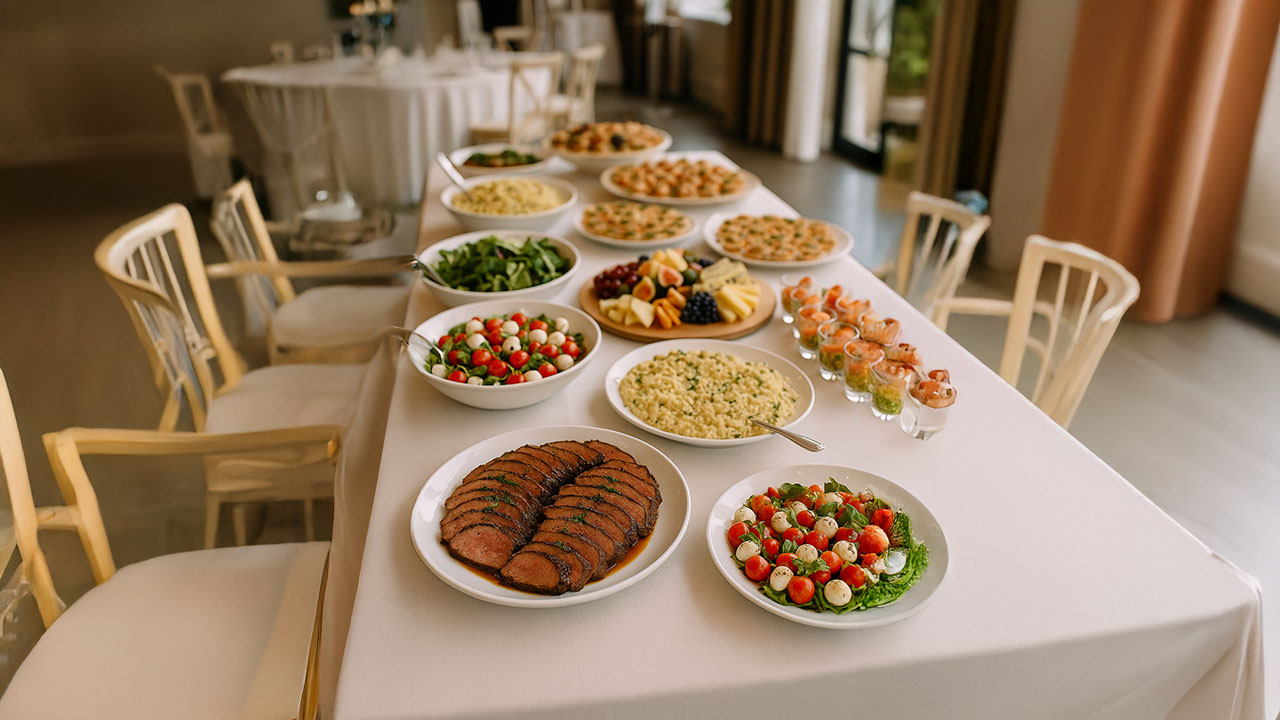
Buffets have gained popularity for their versatility and casual elegance. They allow guests to sample a variety of dishes and cater to different dietary needs. A well-organized buffet can still feel luxurious if you focus on presentation and flavor. Consider themed buffet stations, such as:
- Mediterranean Table: Hummus, pita, roasted vegetables, kebabs, and couscous.
- Southern Comfort: Fried chicken, mac and cheese, cornbread, and collard greens.
- Seafood Spread: Grilled shrimp, oysters, salmon, and seafood pasta.
- Farm-to-Table: Seasonal roasted vegetables, organic greens, and local meats.
To maintain flow and reduce wait times, set up multiple stations and have staff assist with serving portions.
- Food Stations and Live Cooking Bars
For couples who want an interactive dining experience, food stations are a fantastic choice. These “mini-buffets” feature chefs preparing dishes on the spot, adding flair and freshness. Guests can mingle and customize their meals as they move between stations. Popular options include:
- Pasta Bar: Guests choose noodles, sauces, and toppings; the chef sautés everything to order.
- Carving Station: Roasted prime rib, turkey, or pork loin sliced fresh with gourmet sauces.
- Taco or Fajita Station: A lively option featuring tortillas, seasoned meats, salsas, and guacamole.
- Sushi Bar: Freshly rolled sushi and sashimi for a refined, modern feel.
- Stir-Fry Wok Station: Colorful vegetables and proteins cooked in aromatic sauces.
Food stations work especially well for modern lofts, outdoor tents, or garden weddings where movement and energy are part of the ambiance.
- Cocktail-Style Receptions
If you prefer a relaxed, social atmosphere, a cocktail-style reception with heavy hors d’oeuvres can replace a sit-down meal. This style encourages mingling and dancing throughout the evening. You can include a mix of passed appetizers and stationary grazing tables. Examples include:
- Mini crab cakes, caprese skewers, or beef sliders.
- Gourmet cheese boards with fruits, nuts, and honey.
- Antipasto platters with cured meats and marinated vegetables.
- Bite-sized desserts like macarons, chocolate truffles, or cheesecake cups.
This approach works well for art galleries, rooftop venues, or city lofts where space might be limited and a formal dinner isn’t necessary.
- Family-Style Meals
A family-style dinner combines the elegance of a plated meal with the warmth of a shared experience. Large platters of food are placed on each table, and guests serve themselves. It encourages conversation and creates a cozy, communal feeling. Family-style menus often feature hearty, comforting dishes like:
- Roasted chicken with herbs and root vegetables.
- Braised short ribs with mashed potatoes.
- Seasonal pasta dishes and fresh garden salads.
- Bread baskets with flavored butters and oils.
This option is ideal for rustic venues, vineyards, or barn weddings that emphasize togetherness and hospitality.
- Cultural or Regional Cuisine
Celebrate your heritage or the destination of your wedding by incorporating cultural cuisine. Ethnic menus bring vibrancy, flavor, and storytelling to your celebration. Some popular examples include:
- Italian: Antipasto platters, handmade pasta, and tiramisu.
- Mexican: Street tacos, elote corn, and churros.
- Indian: Curry stations, naan bread, and samosas.
- Hawaiian or Polynesian: Luau-style roasted pig, tropical fruits, and coconut rice.
- Japanese: Bento boxes or ramen stations.
- Mediterranean: Grilled lamb, olives, and baklava.
Guests often appreciate the authenticity and personal connection behind cultural dishes, especially when the couple shares stories behind their choices.
- Late-Night Snacks
When the dance floor is still buzzing, a late-night snack is a thoughtful and fun touch. It helps guests refuel and adds an element of surprise. You can mirror your favorite comfort foods or give them a gourmet twist. Ideas include:
- Mini pizzas or sliders.
- French fry bar with dipping sauces.
- Milk and cookies station.
- Donut wall or churro cart.
- Breakfast bites like mini waffles or breakfast tacos.
These snacks can be served from food trucks parked outside or from mini stations inside the venue.
- Dessert Tables and Specialty Sweets
While wedding cakes remain traditional, couples are increasingly opting for dessert tables or alternatives. A dessert display not only satisfies sweet cravings but also serves as a visual centerpiece. Ideas include:
- Cupcake towers with assorted flavors.
- Mini dessert shooters of mousse, cheesecake, or panna cotta.
- Pie bar featuring apple, pecan, and berry pies.
- Ice cream sundae station with toppings galore.
- Chocolate fondue fountain with fruits and marshmallows.
- Donut wall or macaron tower for a modern touch.
You can also offer takeaway dessert favors such as cookies with your initials or small jars of honey.
- Signature Drinks and Beverage Stations
Pairing great food with creative beverages enhances the overall experience. Signature cocktails inspired by your story or theme are a wonderful personal touch — like “The Just-Married Mojito” or “Lemongrass Bliss.” You can also offer:
- Wine tasting stations featuring local vineyards.
- Craft beer bars highlighting regional brews.
- Non-alcoholic mocktail stations for family-friendly options.
- Coffee and tea bars with flavored syrups and toppings.
- Lemonade or iced tea dispensers for summer weddings.
Don’t forget to ensure water and soft drinks are easily accessible throughout the evening.
- Outdoor and Seasonal Food Ideas
For garden, vineyard, or beach weddings, the menu should harmonize with the environment and season.
- Spring: Fresh salads, asparagus, strawberry desserts, and herbal cocktails.
- Summer: Grilled meats, seafood, tropical fruits, and light desserts.
- Autumn: Roasted vegetables, pumpkin soup, apple tarts, and warm ciders.
- Winter: Hearty stews, truffle pasta, hot chocolate bars, and mulled wine.
Incorporating local ingredients and seasonal produce not only enhances flavor but also supports sustainability.
- Food Trucks and Casual Dining
For couples who want something unexpected and fun, food trucks bring a casual charm to outdoor venues. You can hire a mix of trucks serving:
- Gourmet burgers and tacos.
- Wood-fired pizzas.
- Gelato or crepes.
- Coffee or boba tea.
Guests love the novelty and variety, and it gives your reception a lively, festival-like feel.
- Dietary-Friendly Options
Modern weddings should accommodate guests with dietary restrictions. Always include vegetarian, vegan, gluten-free, and allergy-friendly options. Creative solutions include:
- Vegan BBQ jackfruit sliders.
- Gluten-free pasta or quinoa salads.
- Dairy-free desserts like coconut sorbet or fruit tarts.
Labeling dishes helps guests feel comfortable and cared for.
The best wedding food reflects your personality as a couple — whether it’s a fine-dining experience or a backyard feast. Focus on flavor, quality ingredients, and presentation. Collaborate with your caterer to design a cohesive menu that flows from cocktail hour to dessert, matching the season, setting, and theme of your celebration.
Ultimately, great wedding food is about connection — bringing people together to share, savor, and celebrate one of life’s most joyful moments.